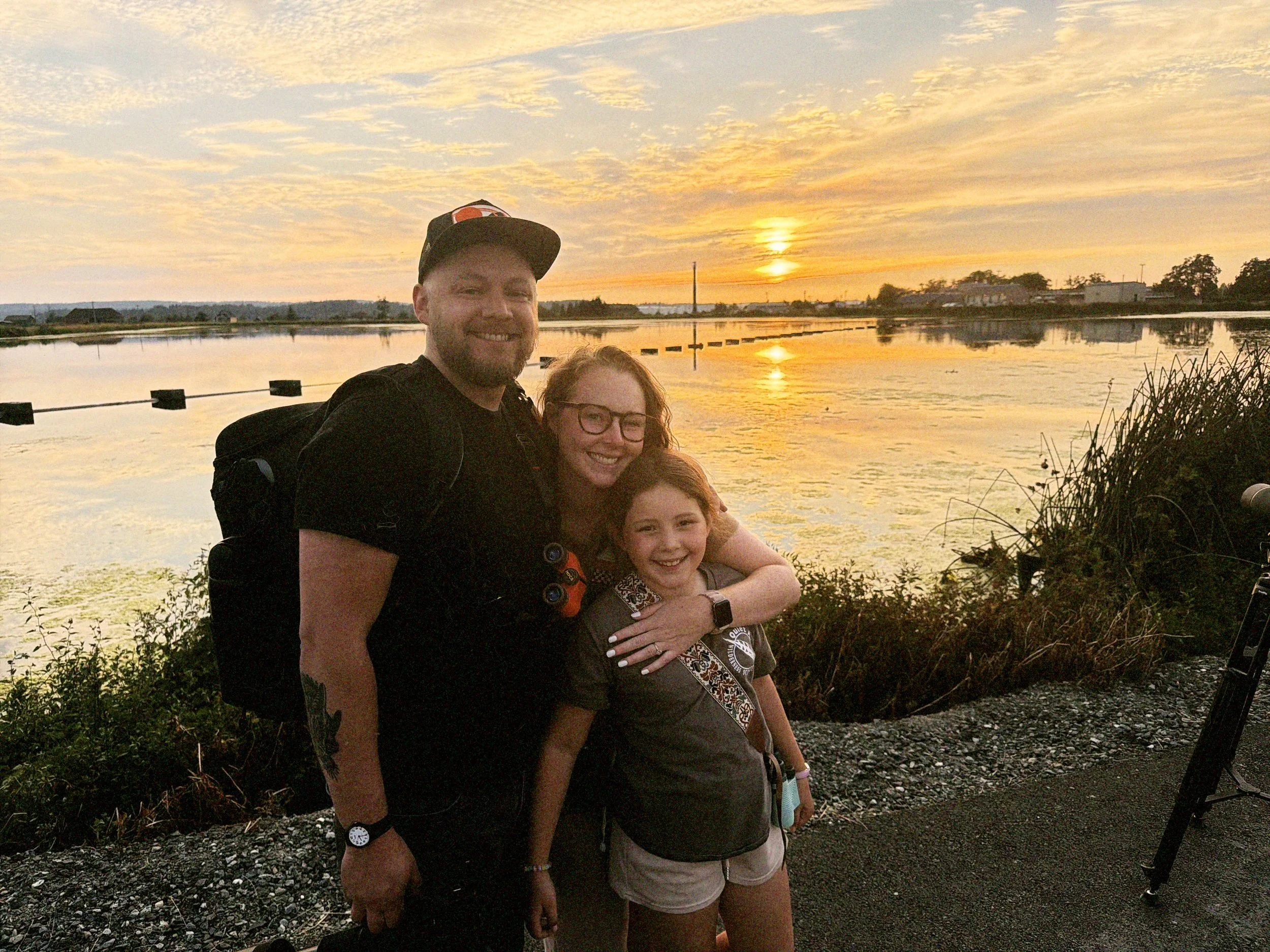
The Terek Sandpiper
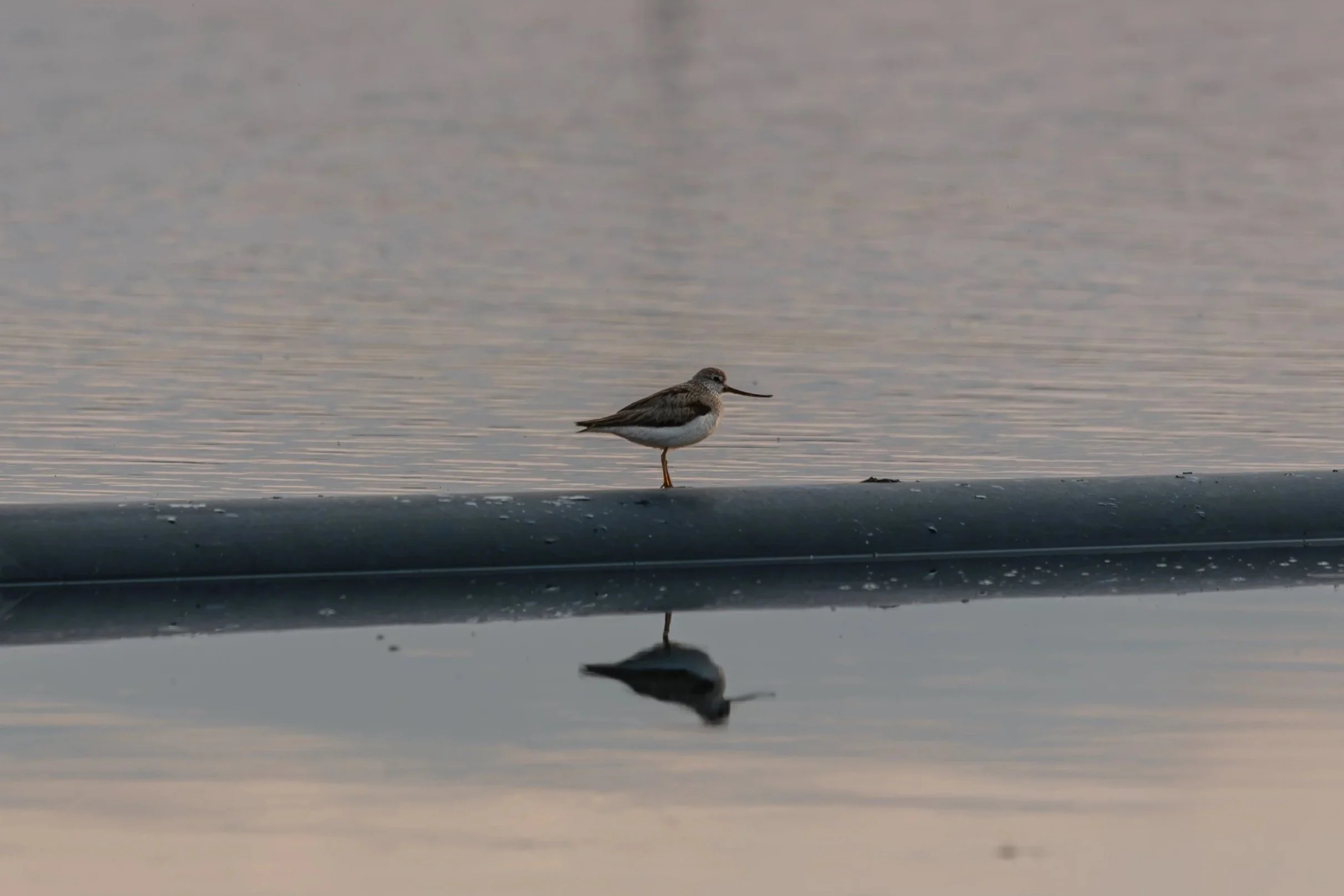
On July 20, 2026, a new friend of mine texted me asking if I had gotten up early to see the Terek Sandpiper. We had been talking about Carkeek Park before then, so I thought it was a special sandpiper coming through. On my lunch break, Hannah and I drove over there to try and find it. He said it was by the sewage ponds, which we didn't understand, but we looked anyway. We spent 20 minutes with binoculars and my scope looking over a group of crows and gulls, trying to find a sandpiper. We spotted a few Killdeer and Spotted Sandpipers, but none with the bill of the Terek. So we called it and drove home in time for me to clock back in.
I texted my friend that I hadn't seen it there, and he replied, "Oh, it's in Stanwood at the water treatment plant!"
Oh.
Obviously.
It's in Stanwood, just a quick hour drive up north. Duh.
So I texted Hannah, "Wanna drive up to Stanwood to see that sandpiper...?" and by golly, she was in for the adventure. We planned to put our little kids down for bed, leave them with Grandma, and take Jane with us right after their bedtime.
By this point, I'd been doing a little more research on this special bird. As it turns out, this bird has only been recorded in the lower 48 a total of four times in history: Rhode Island in 2020, Virginia in 2008 (though that one wasn't chaseable), California in 2003, and Massachusetts in 1990. Outside of Alaska, this bird is extremely rare.
This bird normally breeds from Finland across Siberia and winters in Southern Asia, Australia, and Eastern Africa. Alaska gets the occasional sighting because it's much closer to Siberia, but nowhere near Washington State, let alone an hour from our house. So we knew we had to go!
We took off at around 7:15 from home, heading north. Our instructions from my friend Ryan were to park across the street from the water treatment plant in the Jack in the Box parking lot and walk over. Before even pulling into the parking lot, we saw them.
A group of other birders.
Unmistakable.
Binoculars, huge camera lenses, scopes, socks and sandals, khaki vests, a Scandinavian vallhorn (I'll return to this later). They had it all.
We passed several groups of birders on the way to the location, and all we had to ask was, "Is it still there?" to which they responded with jubilance, "It sure is!"
The crowds were dying down a little by the time we got there, just a short walk from the Jack in the Box, but there were still enough people gathered to show us exactly where we needed to be. I set up my scope next to another photographer, a woman in her late 60s sitting on the ground, stabilizing her lens with her knees. No words needed to be exchanged for us both to know the excitement of the moment.
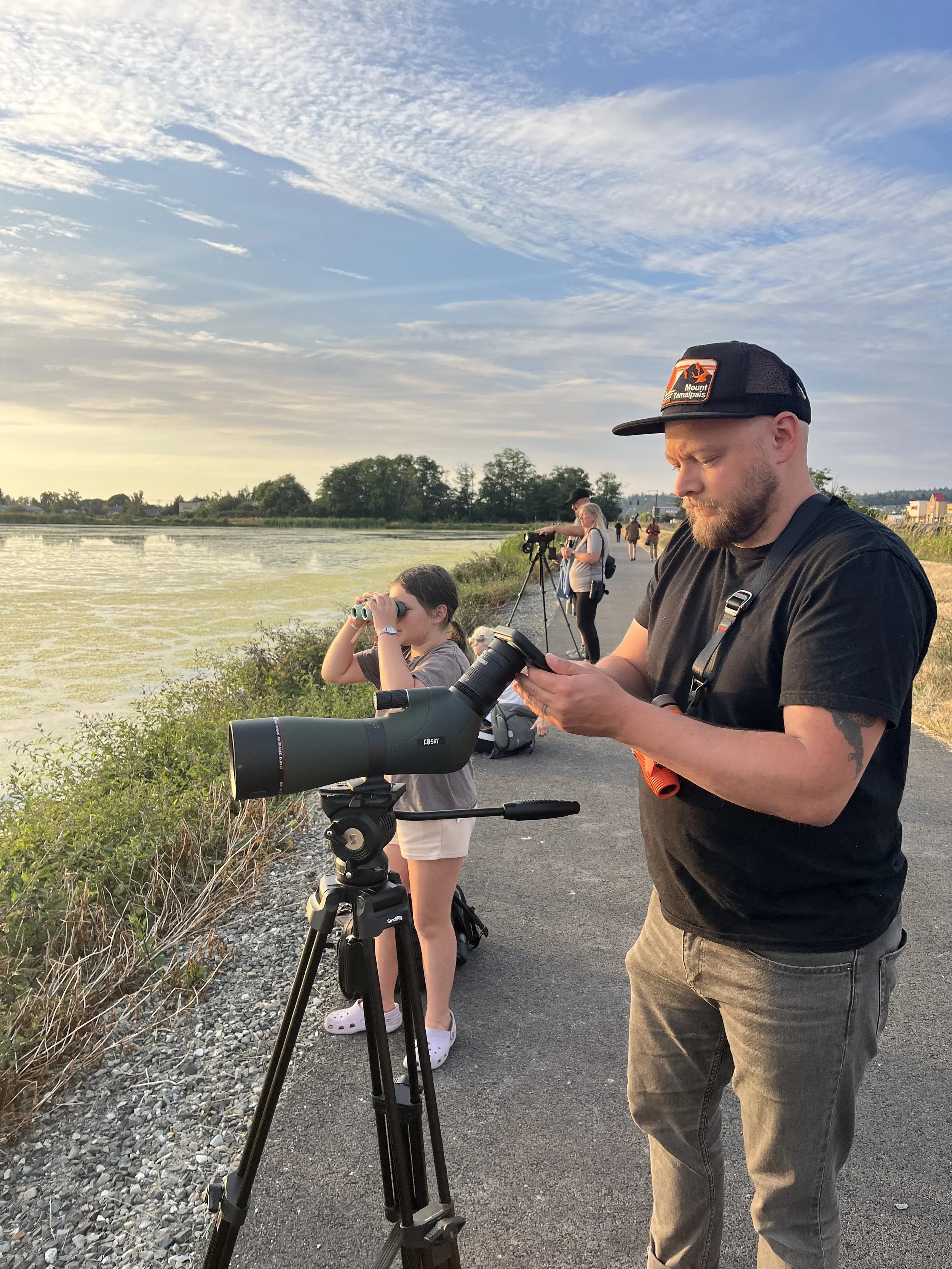
It didn't take long to find it after getting an uncharacteristically vague description of where it was.
"On that block, by the duck."
Excuse me...
"The duck?"
What are we talking here? A Mallard? A Bufflehead? An American Wigeon? A Common Merganser? A Ruddy Duck? A Redhead? A Wood Duck?
I digress.
Serenely sitting there, presumably napping next to a Mallard, was our bird.
The Terek Sandpiper.
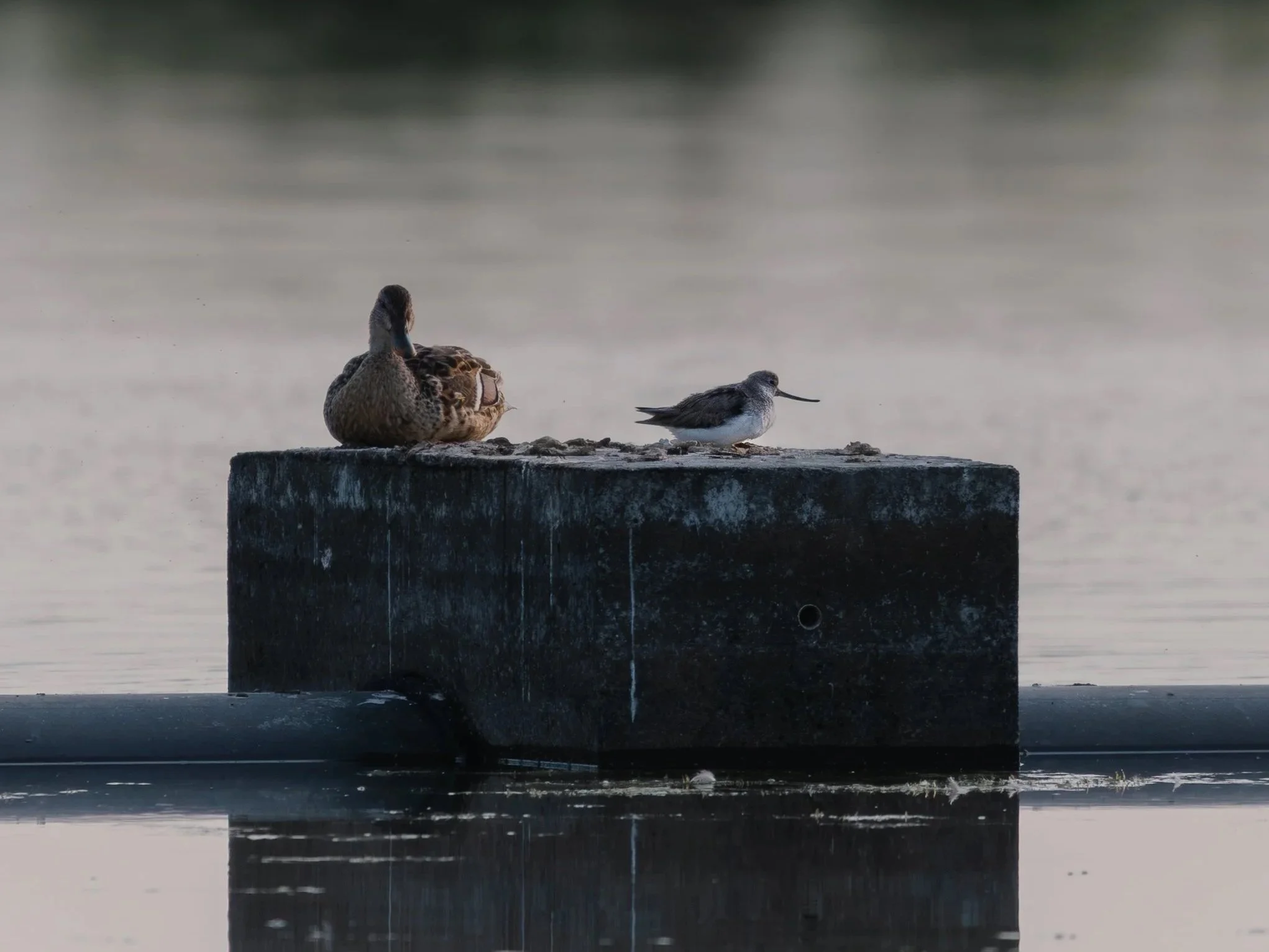
Its head was tucked inward toward its body, facing away from us, so we couldn't identify its signature upturned bill, but we knew it was her. It only took a moment for her to shuffle awake because the Mallard decided to take off, startling the Terek.
And there it was.
The bill.
Much longer than the bill of a Spotted Sandpiper, more like a dowitcher's, but curved upward at the end. It was perfectly silhouetted against the setting sun, with the water glistening behind her.
I wished I had words with a more refined vocabulary, but all that escaped my mouth was, "Oh... my... God..."
I was stunned.
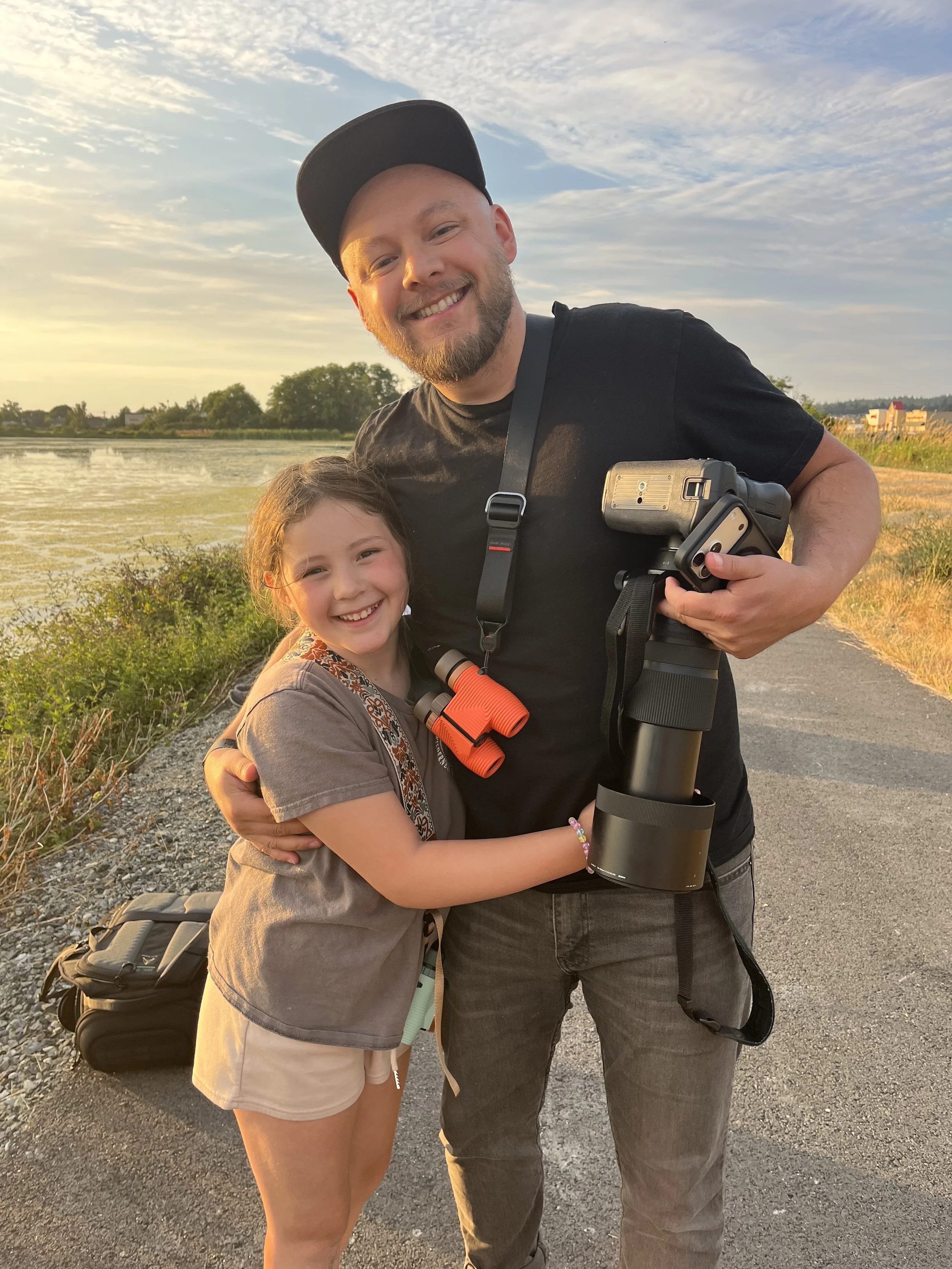
I locked off my scope and let Hannah and Jane see her too. From there, we just tried to capture the moment as much as we could. I grabbed my camera and started firing off shots. The woman next to me and I both lamented that we didn't have longer lenses to satisfy our desire to see this bird even closer, but we gladly accepted that this was what we had.
We spoke with a few other people there: another photographer who had the same binocular straps as Hannah ("It's a cool vibe."), an older couple who were delighted to see Jane out birding with us, and a young father, Michael, with his two sons, Bryce and Danny.
Michael asked where we had come from.
"Just Seattle," I said, hoping the nonchalant tone about our hour-long drive would be impressive.
And it was.
"That's a drive!" he said.
So we asked where he was from.
"We're from Spokane."
My nonchalance was rivaled.
"What??? Spokane? How long of a drive is that?"
"Just about five hours with good traffic. I got here yesterday, got an hour of sleep, but missed her. I would've stayed to watch her come back, but we had plans, so we drove home."
"Wait... so you came back??"
"Yeah! We drove in again today and watched her fly in at 7:47. So worth it."
Excuse me?
That's over 20 hours of driving to see a bird.
I was starting to feel a lot less crazy about my birding obsession after meeting Michael.
We talked with them for some time. He lit up when he heard how old Jane was and that she had purchased her own pair of binoculars by the age of nine. He had apparently been birding since he was eight years old, and his love for birds had only grown since. We exchanged information, and after marveling over the Terek together for about 10 minutes, with the sun nearly set, we decided it was time to leave.
We said our goodbyes, and Michael called out, "Bye, Jane! Best of luck with your birding adventures ahead!"
It was an apt way to close out this magical evening.
But then there was the Scandinavian vallhorn.
At the end of the path to the water treatment plant came a rugged, weathered man striding toward us with a tripod, backpack, and some kind of vallhorn. Not your cookie-cutter birder, in my estimation.
As I passed him, I said, "She's still there! You still have time to see her!"
He responded with surprising sincerity. Still walking with urgency, he turned around to face us.
"This is actually a reunion. I first saw this bird when I was 30 years old with my dad in Alaska. We haven't seen one since. Oddly enough, my dad and I were just in that same spot in Alaska last week. But I guess sometimes, the bird finds you."
Incredible.
Looking like a reenactment of January 6th, this man, horn in hand, full of joy, and all by himself, wanted to reunite with a bird he had last seen as a young man alongside his father.
This whole experience has really made me think. It's amazing how meaningful one bird can be. This one bird uprooted the plans of so many people, hauling all their gear and family along just to look at it.
I got asked once why I was into birding. Their intentions were innocent, but they asked, "What's in it for you? Do you sell the pictures or something?" As though it had to have an ROI.
I don't yet have a clear answer to that question other than: I love it.
It's a true joy to watch, observe, and document birds. It's worth driving long distances to see rare ones. It's worth spending my weekends, lunch breaks, and any marginal time I have finding a spot to look at birds.
I'm not fully sure why yet, but seeing the Terek Sandpiper only deepened the mystery of birdwatching for me.
I hope one day to see the Terek again and reflect on the many years of birdwatching that have passed since.